How suction, pressure and robotic cleaners work
Each kind is defined by what moves it and where the dirt ends up. Hayward, Pentair and Leslie's all sort automatic cleaners into the same three groups.
| Kind | Power | Debris | Extras | Price |
|---|---|---|---|---|
| Suction side | Suction from your pool pump, through the skimmer or a dedicated vacuum line | The pump basket and pool filter, a skimmer basket or a leaf canister | None. Leslie's suggests a pump of 1 hp or more | From $131.99 at Leslie's (an above-ground model on sale) |
| Pressure side | Water pushed from a return line or a dedicated cleaner line | A debris bag on the cleaner | A booster pump for most models | $29.99 to $999 at Leslie's |
| Robotic | Its own motor, on a power cord or a battery | A filter basket inside the robot | An outlet on a GFCI circuit for corded models, a charger for cordless ones | $169.97 to $999 for the four robots below |
Suction-side cleaners
A suction cleaner connects to your skimmer or a dedicated vacuum line and moves on the suction of your pool pump, per Leslie's suction cleaner page. It vacuums the floor and walls, and what it picks up lands in the pump basket and the pool filter. Hayward adds that its suction cleaners can send debris to a leaf canister or the skimmer basket. Leslie's calls suction cleaners the lowest-cost type, “starting below $200,” and recommends a pump of 1 hp or more. Hayward pitches its AquaNaut models as “the perfect partner for use with variable-speed pumps,” with suction power at low flow.
Pressure-side cleaners
A pressure cleaner runs on water pushed back into the pool. Its feed hose attaches to a dedicated cleaner line or a return line, and the debris goes into a bag on the cleaner, so leaves stay out of your pump and filter. Most models need a booster pump on a timer. Leslie's names a 3/4 hp booster, and Pentair's booster pump manual rates its own at 1.13 hp and says it must connect to the return line after the filter. The Polaris 280, which Leslie's calls the most popular pressure cleaner, needs a booster and sold for $599 at Leslie's on October 20, 2026. A few low-pressure models, the Polaris 65 and 360, run off a wall return without one, per Leslie's pressure cleaner page.
Robotic cleaners
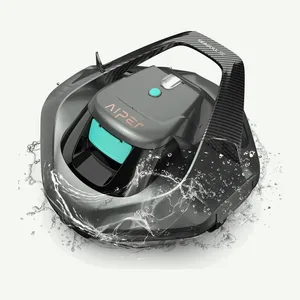
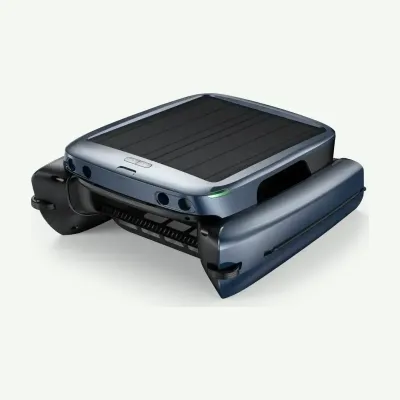
A robot carries its own motor and filter and does not rely on the pool's pump or filtration, per Maytronics, which makes Dolphin robots. Hayward calls robots “plug-and-play” and says they “may require a larger upfront investment.” Maytronics describes suction and pressure cleaners as “largely floor-only tools,” while many robots climb walls and scrub the waterline. That is a robot maker's view: Leslie's lists the Polaris 280 pressure cleaner as sweeping the bottom and walls. Coverage also varies between robots. The Aiper Scuba S1 lists the floor, walls and waterline, the Wybot A1 and the corded Dolphin E10 the floor only.
Corded vs cordless robotic pool cleaners
A corded robot gets power through a floating low-voltage cable from a power supply beside the pool. A cordless robot runs on a built-in lithium-ion battery. Maytronics says the cord gives “unlimited runtime,” while most cordless models last 1.5 to 4 hours per charge and large pools may need more than one cycle.
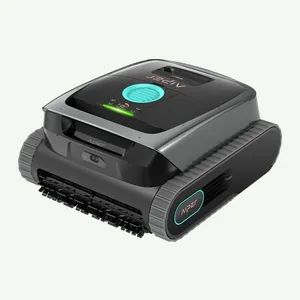
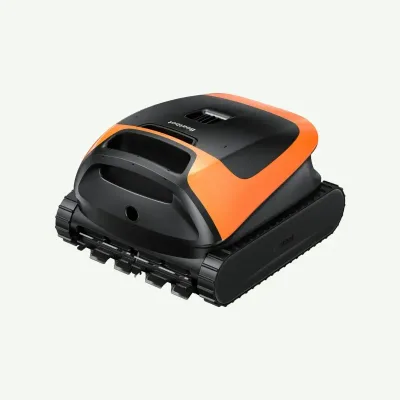
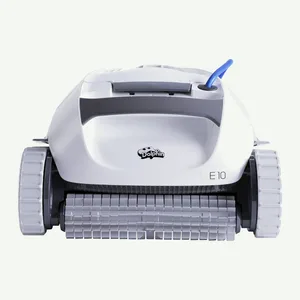
Claimed run times per charge for the cordless robots below: 2 hours for the Wybot A1, 3 hours for the Aiper Scuba S1 and 5 hours for the Beatbot Sora 30. These are brand figures, not independent ones. The corded Dolphin E10 runs a 90-minute cycle on a 40 ft cable and is rated for above-ground pools up to 30 ft long. It was $568 on October 21, 2026. Cordless robots are compared in our cordless robotic pool cleaner guide.
A corded robot puts a power supply next to the water. The manual for the corded Dolphin Basic 19 sets the rules: place the power supply at least 10 ft from the pool's edge, connect it only to a circuit with a ground fault circuit interrupter (GFCI), check that GFCI on a routine basis with its test button, and take the robot out before people get in the water. Your own model's manual has the rules that apply to it.
Which type suits your pool
Match the kind to your debris, your pump and how much lifting you can do. In most cases:
- Heavy leaves. A pressure cleaner. Leslie's says pressure cleaners have the “largest intake throats of all cleaner types,” and Pentair says a pool that “accumulates a lot of leaves and debris” suits a pressure-side cleaner.
- Fine dirt, sand and silt. A suction cleaner can handle it. Leslie's calls them “absolute champions at picking up fine debris like sand, silt, and dirt.” A robot with a fine filter is the other route: the Aiper Scuba S1 lists a 3-micron filter.
- No booster pump. A suction cleaner, a robot, or one of the low-pressure Polaris models that run off a wall return.
- Walls and waterline. A robot that lists them, such as the Aiper Scuba S1 for inground pools or the Beatbot Sora 30 for above-ground and inground pools.
- Above-ground pools. Leslie's sells suction cleaners made for above-ground pools, and the Dolphin E10 is an above-ground robot. Robots are sorted by pool in our above-ground guide and our inground guide.
Who should skip a robot: anyone who cannot lift it out of the water after each run. Maytronics tells owners to remove the robot, empty the filter basket and rinse it after every cycle. The Beatbot Sora 30 weighs 19.6 lb and the Dolphin E10 14.6 lb, per their brands. A pressure cleaner can stay in the pool between runs, per Leslie's, which still advises taking it out when you add chemicals such as shock.
What each type costs to buy and run
Up front, a suction cleaner is usually the cheapest. The cheapest suction cleaner at Leslie's on October 20, 2026 was $131.99, an above-ground model on sale. Pressure cleaners ran from $29.99 for an above-ground model to $999, and the Polaris 280 was $599, before any booster pump your pool may need. Booster pump prices were not checked for this page. Robots here start at $169.97 for the Wybot A1 and include the Aiper Scuba S1 at $529.99 and the Beatbot Sora 30 at $999, checked October 20, 2026. The corded Dolphin E10 was $568 on October 21, 2026. Robot prices by class, with extras and checkout costs, are in our robotic pool cleaner cost guide.
Running costs follow the power source. A suction cleaner only works while your pool pump runs. A pressure cleaner needs the booster pump plus the filter pump: Pentair's manual says the cleaner should start 30 to 45 minutes after the filter pump starts and stop 30 to 45 minutes before it stops. A robot runs on low voltage and leaves the pool pump alone. Hayward claims its robots use “up to 94% less energy than pressure cleaners.” That is a maker's figure. We found no independent energy comparison of the three kinds, so this page gives no three-year running cost.
Parts wear on every kind. Leslie's says pool chemicals wear down the plastic and soft parts of pressure cleaners, “like tires and bags.” For robots, Maytronics advises checking that brushes, filter baskets and drive tracks are sold as spares before you buy. The Aiper Scuba S1 has a 2-year warranty and the Wybot A1 1 year, per the brands.
Limits and common complaints
Every kind has a known weak spot, and the sources name them:
- Suction cleaners and leaves. Leslie's says they “can sometimes struggle with heavy loads of large leaves or sticks,” which can clog the cleaner or fill the pump basket. Its fix is a leaf canister on the hose.
- Pressure cleaners and the filter pump. Pentair says its cleaner should not run while the filter system is off: that damages the booster pump and voids the warranty. In leaf season, Leslie's says the bag may need emptying after every cycle.
- Cordless robots and the battery. Maytronics says weekly eco modes split the battery into short cycles that usually clean the floor only.
- Robots and durability. Owner complaints differ by model. For the Dolphin E10, Amazon's review summary counts 13 buyers mentioning durability, 12 of them negatively, among 114 ratings as of October 21, 2026. Each robot review lists its own owner complaints.
How we read owner reviews and brand specs is explained in how we research.
Robotic cleaners on this site
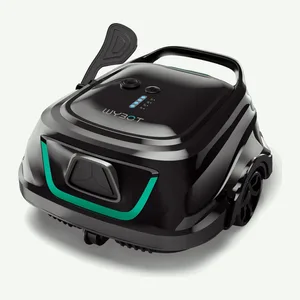
Our reviews cover robots, not suction or pressure cleaners. These four show the range from a floor-only budget robot to a robot that cleans walls and the waterline, plus a corded model:
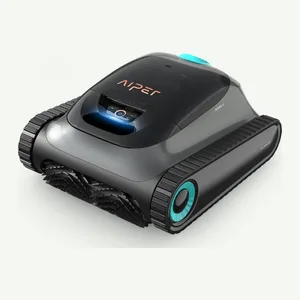
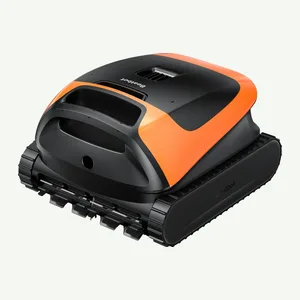
Models the FCC authorized before July 28, 2026 can still be imported and sold. A new foreign-produced robot can't be imported for sale until the FCC authorizes it, and that now requires a Conditional Approval from the Department of War. The FCC says its exclusion for unmanned underwater vehicles doesn't exempt pool-cleaning robots that meet its definition when they operate above ground.
All robots are ranked in our best robotic pool cleaners guide. If you are still choosing between a robot and a suction or pressure cleaner by price, see our pool vacuum guide.
Questions people ask
Which type of pool cleaner is better, robotic or pressure side?
Are suction side pool cleaners good?
What pressure side pool cleaner can I use without a booster pump?
What is a suction side pool vacuum?
Is a robotic pool cleaner better than a suction cleaner?
Can you swim while a robotic pool cleaner is in the pool?
Ready to pick one?
I compare 50 robotic pool cleaners on safety, published specs, price, warranty and returns, and owner reviews. These score highest right now.